The Earliest Brick Production in Canada
Fired-clay brick arrived in what is now Canada with French colonial construction in New France during the late 17th century. The earliest documented brick kiln in the region operated near Quebec City around 1670, producing rough-fired units used in fort construction. British colonial expansion through the 18th century brought more systematic production to Nova Scotia and Upper Canada, where local clay deposits along river valleys made small-scale kilns economically viable.
Before local production scaled up, brick was expensive enough that it appeared mainly in public buildings, churches, and the residences of merchants and colonial administrators. Ordinary dwellings relied on timber frame construction because wood was abundant and easier to work without skilled masons. That changed significantly as urban settlement density increased and fire risk became a documented problem in commercial districts.
The Mid-19th Century Kiln Industry in Ontario and Quebec
The period from roughly 1840 to 1890 saw brick manufacturing expand from small rural operations into organized industrial enterprises. Southern Ontario's Credit Valley, the Don Valley east of Toronto, and the clay plains around Hamilton supported clusters of kilns that supplied growing cities with enormous volumes of building material. The Don Valley Brick Works, which operated from 1889 well into the 20th century, became one of the largest producers in the country and supplied much of the brick used in Toronto's late Victorian expansion.
Quebec's brick industry concentrated around the St. Lawrence River plain, where Ordovician shale and marine clay provided reliable raw material. Montreal's rapid commercial growth during the same period — driven by railway expansion and port activity — generated consistent demand that pushed kilns toward continuous-operation designs rather than periodic-fire batch kilns.
Brick Types and Their Identifying Characteristics
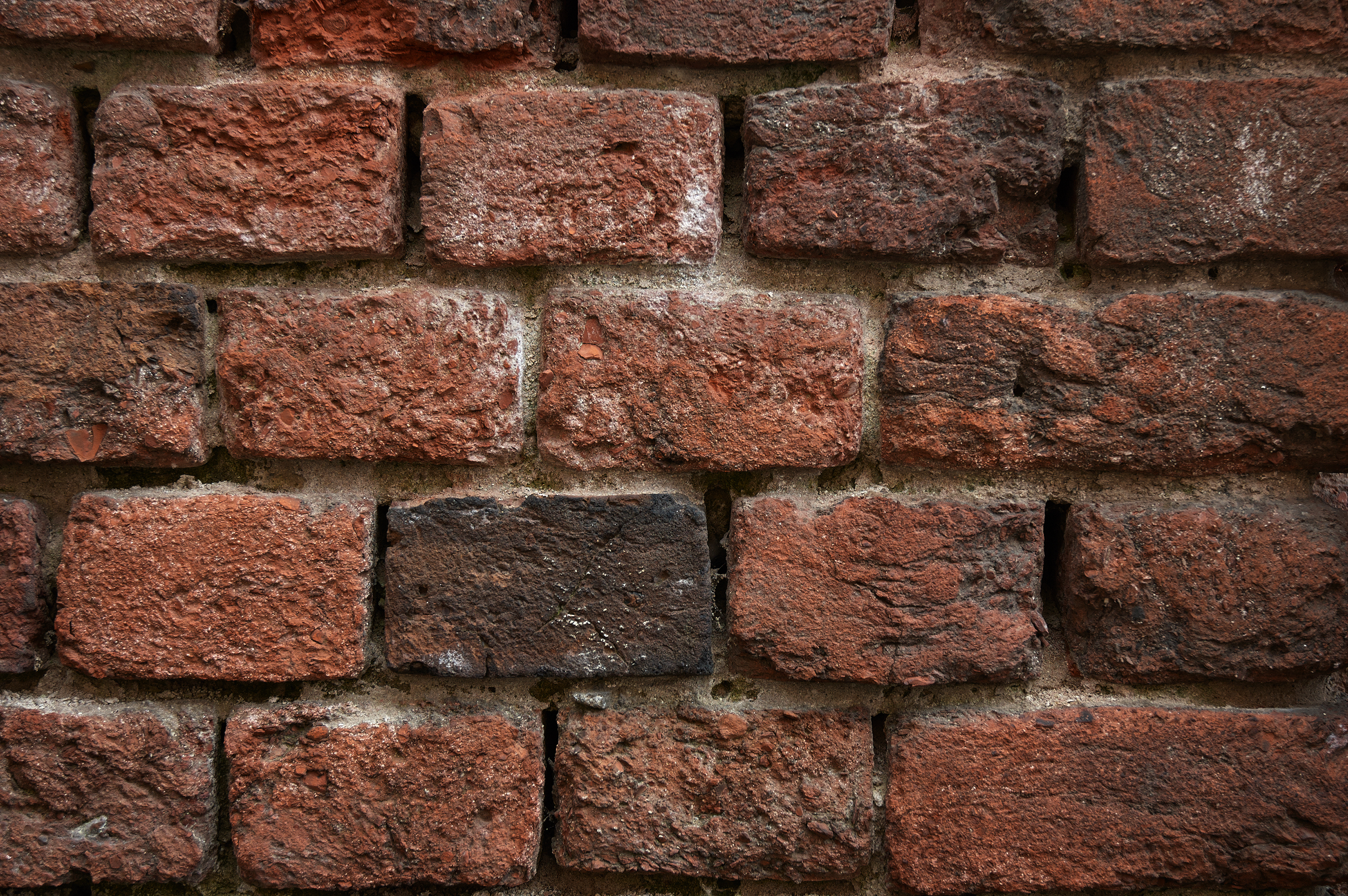
Hard-fired common brick, sometimes called stock brick, characterized most Canadian urban construction of the 1870s through 1900s. These units were fired at relatively high temperatures — around 900 to 1100 degrees Celsius — producing a dense, low-porosity unit that resisted freeze-thaw damage reasonably well in Canadian winter conditions. Colour ranged from the red-orange of high-iron clay to the buff yellow common in the London, Ontario area and parts of southwestern Ontario, where shale-derived clay produced a distinctly pale unit.
Face brick, used on exterior-visible courses, was selected for more uniform colour and surface texture. Common brick was relegated to interior wythe construction where appearance was irrelevant. This distinction matters for restoration: the face wythes of heritage buildings often used material from a specific kiln whose output is no longer available, making exact-match replacement difficult.
The Shift From Load-Bearing to Veneer Construction
Through most of the 19th century, brick masonry was structural. Walls carried floor and roof loads directly, and thickness was calculated accordingly — three or four wythe walls were common in commercial buildings over two storeys. This is why the walls of older downtown warehouses and factory buildings are noticeably thick: 36 to 56 centimetres for mid-rise commercial construction was not unusual.
Steel-frame construction, which became commercially practical in Canada after roughly 1895, changed the equation. The structural frame could carry vertical loads, and brick became a cladding material rather than a structural one. Veneer construction — a single wythe of brick tied back to a backup wall — allowed builders to use far less material per square metre of facade while retaining the visual qualities that brick provided.
The practical consequence for preservation is that load-bearing masonry buildings are structurally different from veneer buildings even when they look similar from the street. Interventions that would be straightforward on a modern veneer wall can be genuinely risky on a load-bearing structure where the masonry is integral to the building's stability.
Mortar Composition and Its Role in Durability
Original 19th-century mortar in Canadian buildings was almost always lime-based: a mixture of hydrated lime, sand, and sometimes natural hydraulic lime for early-setting properties. Portland cement was patented in England in 1824 but did not become widely used in Canadian masonry until the 1890s. When it did, its higher compressive strength was seen as an advantage — but harder mortars create problems in heritage masonry that were not immediately apparent.
Lime mortar is intentionally slightly weaker than the brick units it joins. This allows the mortar joint to absorb movement — thermal expansion, minor settlement, moisture cycling — rather than transmitting stress into the brick face. When Portland cement mortar is used to repoint old lime-mortar construction, the rigid joint can force that movement stress into the brick units themselves, causing spalling, cracking, and face delamination. This is one of the most commonly documented causes of accelerated deterioration in poorly maintained heritage brick buildings across Canada.
Regional Variations in Canadian Brick Construction
Canadian brick construction is not uniform across the country. Several regional variations are worth noting for anyone working with older buildings.
- Ontario: Dominant use of common red brick and buff brick; high concentration of Flemish bond and English bond in pre-1880 construction; running bond became standard after 1880.
- Quebec: Influence of French construction traditions; early use of rubble stone combined with brick; later period characterized by Montreal grey limestone alongside brick commercial fronts.
- Nova Scotia and New Brunswick: Strong British colonial influence; harder climate exposure than central Canada; higher incidence of stone used in combination with brick for structural elements.
- Western Canada: Brick construction arrived later (post-1880s) with rapid prairie settlement; Winnipeg's warehouse district uses an unusually high proportion of Cream City brick imported from Wisconsin alongside Ontario red brick.
Why So Much Survives
Hard-fired brick from reliable 19th-century kilns, laid in lime mortar with competent workmanship, has an effective service life that routinely exceeds 150 years. The physical chemistry is straightforward: properly fired brick achieves a pore structure that allows water vapour to pass through without retaining liquid water in quantities that cause freeze-thaw damage. Lime mortar remains slightly flexible over time, absorbs minor movement without cracking, and can be repointed repeatedly without damaging the adjacent brick — unlike Portland cement, which is effectively permanent once it cures.
Economic factors also matter. Many older brick commercial and institutional buildings in Canadian city cores survived because demolition costs, zoning restrictions, or functional utility kept them in use long enough to outlast the post-war period of wholesale clearance. Buildings that made it through to the 1980s often came under heritage protection frameworks that made demolition more difficult.
For more on what those frameworks involve, see the article on heritage designation in Canada.
Further Reading
The Canadian Register of Historic Places maintains publicly searchable records on designated heritage properties. The Standards and Guidelines for the Conservation of Historic Places in Canada is the primary technical reference used by heritage professionals across the country.